



Every good block party starts the same way: someone says, "Let's just put a few tables out front on Saturday." That instinct is right. Small outdoor gatherings are one of the easiest ways to turn a street of strangers into a neighborhood. But the gap between a lovely afternoon and a stressful one is usually not the food or the music. It is the boring stuff — permissions, a stocked first aid bag, and a plan for the moment the sky changes its mind.
None of this needs to be heavy. A two-hour checklist, done a couple of weeks ahead, covers almost everything. Here is what to work through.
Start With Permissions, Not Decorations
Before you print a flyer, find out what your municipality expects. Rules differ enormously between towns and even between streets in the same town, so treat any advice you hear from a friend in another neighborhood as a hint, not a rule. A single phone call or email to your local municipal office — often the parks department, the police non-emergency line, or a community liaison — will tell you what applies to you.
Things that commonly require a permit or a heads-up
- Closing a street or blocking parking. Even a short block party usually needs a road closure application, sometimes weeks in advance.
- Using a public park, plaza, or green. Many places require a reservation, and some limit amplified sound, tents, or cooking equipment.
- Selling anything. A bake sale, raffle, or vendor table often triggers different rules than a free potluck.
- Serving food to the public. If you are cooking for the whole street rather than sharing between households, ask your local health department whether a temporary food permit applies.
- Alcohol, bouncy castles, generators, grills, and fireworks. Each of these tends to have its own conditions, and some are simply not allowed on public land.
Write down the answers you get, along with the name of the person who gave them. If something goes wrong on the day, a note saying "approved by X on the 12th" saves a lot of explaining.
Insurance and the neighborly basics
Check whether your homeowners or renters liability coverage extends to an event you organize off your own property; if not, ask whether the event can run under an existing community association or neighborhood group policy. For anything with inflatables, rides, or large crowds, ask the municipality what insurance they require before you book a vendor. This is one area where a short conversation with your insurer is worth more than an hour of searching online.
Then do the low-tech part: tell the neighbors who are not on the group chat. A printed note through the door two weeks out, with the date, the hours, and a phone number, prevents most complaints before they start.
First Aid and the Person Who Owns It
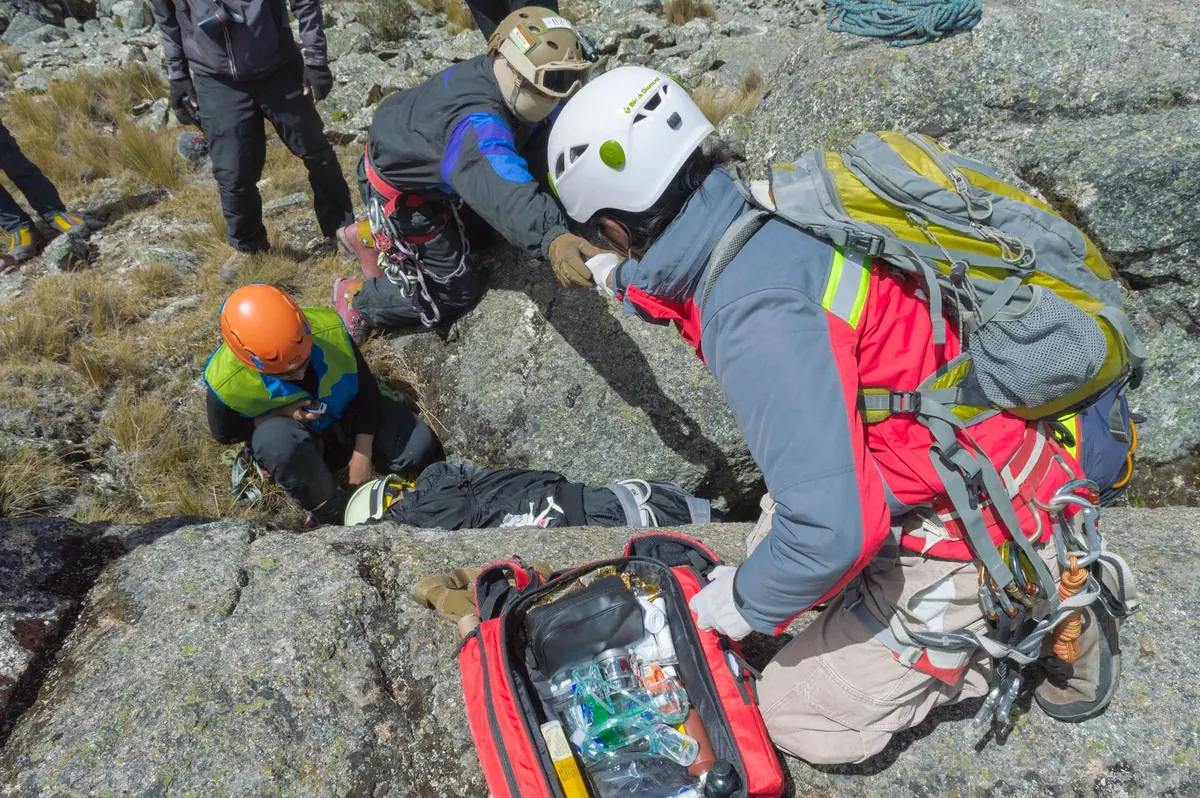
A first aid kit that nobody knows about is not a first aid kit. Choose one person to be responsible for it, tell two others where it lives, and keep it in a fixed spot — under the registration table, in a bright red bag by the grill — rather than in someone's car boot.
What a sensible outdoor kit holds
- Assorted adhesive bandages, gauze pads, and rolled bandage tape
- Antiseptic wipes or solution, plus disposable gloves in several sizes
- Instant cold packs, tweezers, and blunt-nosed scissors
- Blister plasters, sunscreen, and insect bite relief
- Any personal medication a regular attendee may need, kept by that person
- A card with local emergency numbers, the nearest urgent care address, and the location of the closest public defibrillator
Assign at least one person with current first aid and CPR training if your gathering is bigger than a few households, or if children, water, grills, or physical activity are involved. Keep the kit visible and reachable for adults, out of reach for small children.
If someone is seriously unwell or injured, call emergency services first and follow their instructions. Everything in this checklist supports that call — it does not replace it.
A word on heat and food: keep raw meat away from everything else, keep cold things cold, and put out perishable food in smaller trays that get refilled rather than one large platter sitting in the sun all afternoon. If you are uncertain about any health or safety decision at your event, ask a qualified professional rather than guessing.
Weather: Plan for the Forecast You Do Not Want
Check the forecast three days out and again the morning of. Then decide, in advance, what your threshold is for each scenario, so that nobody has to make a hard call in the middle of a downpour with forty people watching.
Heat and sun
Shade is not optional. A pop-up canopy, a few borrowed parasols, or simply moving seating under trees changes the whole afternoon. Add a water station that people can reach without asking, and schedule the active parts — races, games, the grill — for the cooler hours. Remind people to bring hats, and keep a jug of water out for dogs too.
Wind and rain
Anything that catches wind needs weight: sandbags, water containers, or stakes. Skip the tall inflatable signage on a breezy day. For rain, decide ahead whether you have an indoor fallback — a garage, a community room, a covered porch — or whether you cancel. A short "rain or shine" line on the flyer, with a clear statement of what happens if it rains, saves a hundred messages.
Storms and the decision to stop
Lightning is the one thing you do not negotiate with. If thunder follows a flash closely, or the sky turns that particular green-grey, move everyone indoors or into hard-topped vehicles and wait it out well past the last rumble. Have a designated indoor shelter identified in advance — ideally within a minute's walk of the gathering. Wind and hail mean the same thing: stop, shelter, and reassess.
Give a Few People a Job
A gathering with no named roles tends to default to one exhausted organizer. Name four people before the day, and write their names and numbers on a single sheet:
- Event lead — the person who makes the call to pause, move, or cancel
- First aid contact — owns the kit and knows the closest medical facility
- Weather watcher — checks the radar every so often and speaks up
- Setup and pack-down lead — handles tables, power leads, and the last look around
Also write down who is bringing what, so nobody ends up with six potato salads and no bin bags. If children are attending, ask parents to stay responsible for their own kids and set one clear meeting point in case anyone gets separated.
Make the Emergency Plan Visible
You do not need a printed operations manual. You do need three things known by everyone with a role: where the assembly point is, how emergency vehicles would reach the site, and who is calling whose family if something happens. Keep a clear access lane free of tables, chairs, and bikes — even a narrow gap can save critical minutes — and note the nearest cross street for anyone giving directions on the phone.
If you are inviting the public rather than just neighbors, consider whether you want a licensed security presence or trained stewards, and ask the municipality what they expect. For anything beyond a very small gathering, follow local guidance on event safety rather than improvising.
The Two-Week Run-Up
- Three weeks out: call the municipality about permits and street closure; confirm insurance.
- Two weeks out: print flyers, name your four roles, book the canopy or tables.
- One week out: check the kit, buy first aid supplies, confirm the indoor fallback, send the final details.
- Two days out: check the forecast and set your thresholds for heat, wind, and storms.
- Morning of: recheck the forecast, fill water containers, weigh down the canopy, test the phone numbers.
The Night Before: A Five-Minute Walk-Through
Stand where the tables will go and look around with the event already in your head. Where would an ambulance pull in? Where would a hundred people go if the sky turned? Is there glass, broken kerb, or a hidden step someone will trip over in the dark? Are cables taped down? Does someone other than you know where the first aid bag is?
Fix what you can, write down the rest, and then stop. The point of a checklist is to free you from thinking about logistics on the day, so you can spend the afternoon doing the thing that actually matters — meeting the people who live two doors down and never quite had the chance to say hello.
Photo: Roman Apaza / Pexels